


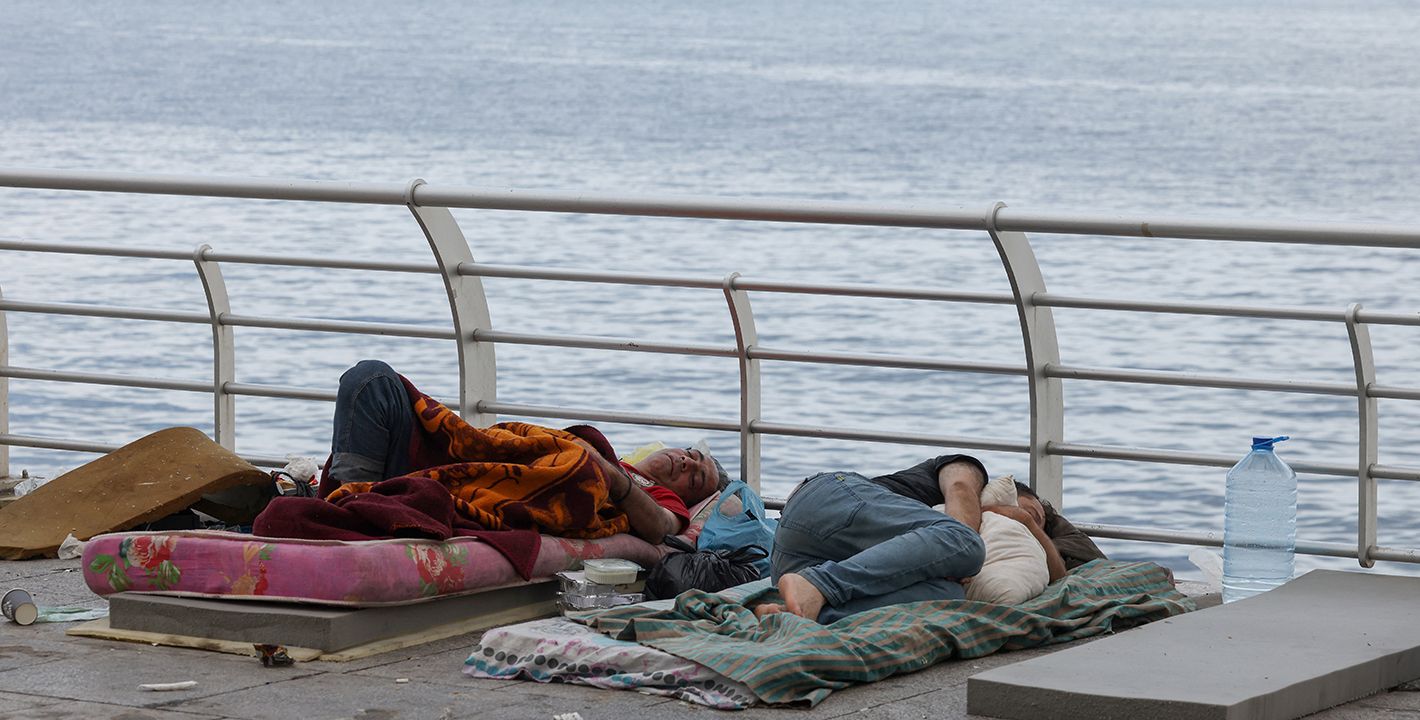
After the 2023 escalation between Israel and Hezbollah, internal displacement returned to shape the lives of thousands of Lebanese, echoing 2006 and earlier episodes, yet with a sharper, more revealing contrast. Not every displaced family experiences the same ordeal, and not every flight from danger is measured by fear alone. It is also measured by the ability to purchase safety, and by whether one can turn an escape into a “comfortable stay” that looks nothing like the televised images of overcrowded schools and improvised shelters.
This is the provocation at the heart of a recent study by Jasmin Lilian Diab, titled, “Who gets to see the sea?” The phrase is not a poetic flourish, but an analytical lens into Lebanon’s classed geography of refuge. Based on forty in depth interviews with Lebanese families displaced from South Lebanon and Beirut’s southern suburbs to comparatively safer, more affluent coastal towns such as Byblos and Batroun, the study traces how socioeconomic status shapes displacement outcomes, materially, socially, and symbolically.
The findings point to a stark divide. Families with financial means were often able to rent private apartments, sometimes furnished, sometimes with sea views, and maintain daily routines with relative continuity. Their displacement, while still rooted in insecurity, could be navigated as a managed transition. Poorer families, by contrast, were far more likely to end up in overcrowded shelters, or shared, precarious arrangements, with minimal and uneven state support, and with vulnerability that deepened rather than receded.
Diab frames this as the privatization of refuge. When the state fails to organize an equitable, coordinated response, shelter becomes a commodity, and safety becomes something to be bought rather than guaranteed. In such conditions, geography does not alone determine where people go, class does. Savings, income, access to the rental market, and the strength of family and social networks become decisive tools of survival. Displacement becomes less a shared national experience and more a stratified one, distributed across a hierarchy of mobility.
The cruelty of this hierarchy is not only material. Economic privilege can also create symbolic distance from the stigma of displacement. The study shows how some wealthier displaced persons resisted identifying as “displaced” at all, recasting themselves as temporary tenants, visitors, or guests. That reframing protects social status, dignity, and self image. Poverty, meanwhile, produces what can feel like double displacement, from home, and from social standing, autonomy, and the sense of being in control of one’s life.
To explain these dynamics, the article uses a multidisciplinary framework that links mobility hierarchies, the privatization of refuge, and classed geographies. The core message is clear, in fragile states, displacement is not a uniform condition. It is uneven, class contingent, and shaped by institutional neglect that forces individuals to rely on private means. The implication is both scholarly and urgent for policy, humanitarian responses that ignore class risk reinforcing inequality, by leaving the market, and informal power networks, to distribute safety.
In Lebanon, the question “Who gets to see the sea?” is not really about a view. It is about who can move away from danger with dignity, and who is pushed into visibility, crowding, and stigma, as if citizenship itself had tiers, and as if survival were a privilege.

