


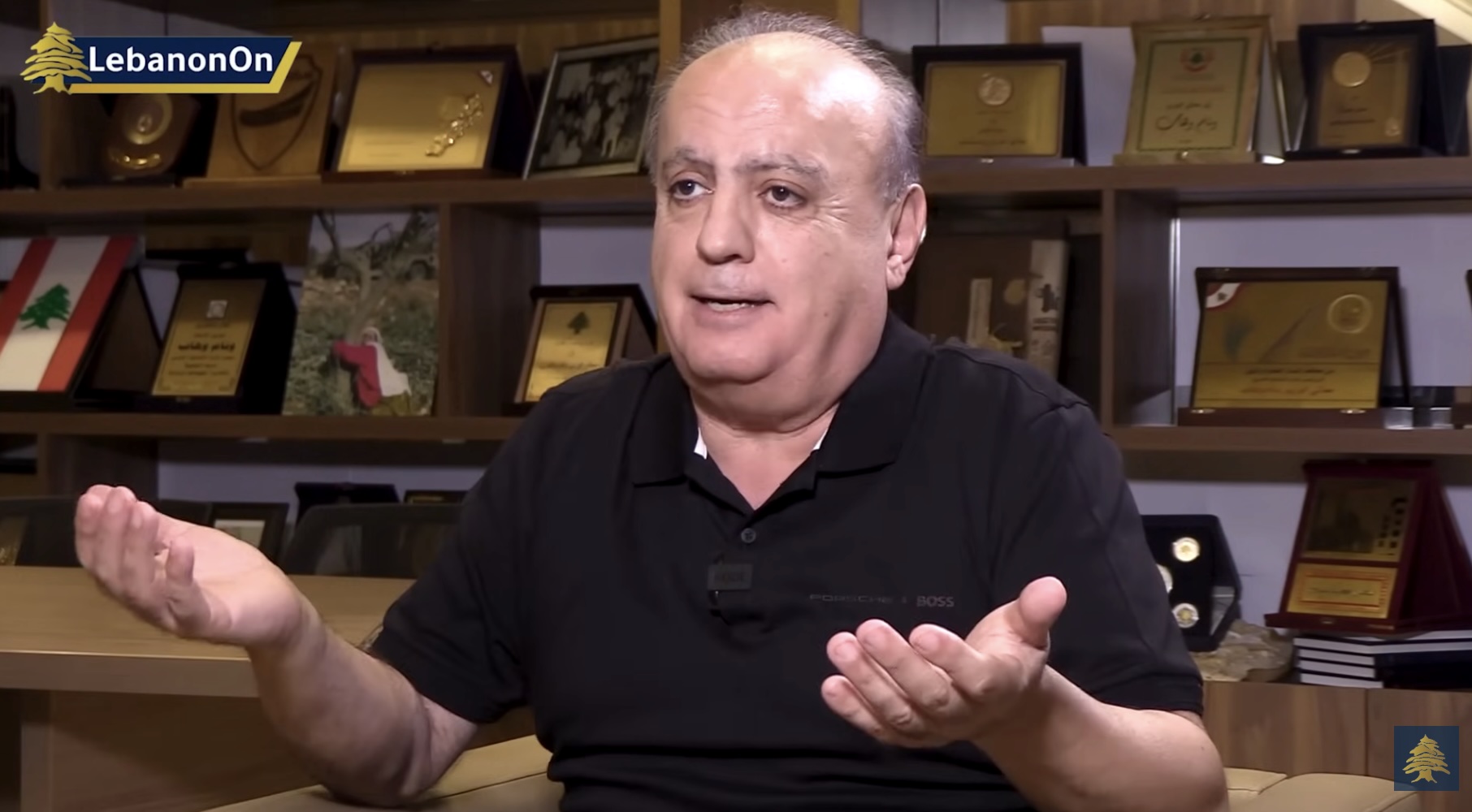
In an interview on the “Lebanon On” platform, the head of the Arab Unification Party, former minister Wiam Wahhab, warned of the possibility of Syria sliding into “Sunni-Sunni strife.” He noted that the events in Suwayda have fundamentally altered the landscape, stating that “it is impossible to speak of the period after Suwayda as we did before it,” in light of the weakness of the central authority, the multiplicity of factions, and the expanding potential for escalation.
Regarding the repercussions of the Syrian crisis on Lebanon and the region, Wahhab emphasized that “no one in the region is prepared to surrender their weapons—neither the small nor the large.” He argued that the existential fear resulting from the course of events is driving everyone toward further armament, calling for a realistic approach to this phase based on easing internal tensions, accelerating reconstruction, and avoiding the provocation of any Lebanese component.
Syria: “Sunni-Sunni Strife” and the Post-Suwayda Era
Wahhab stated that he does not rule out a “Sunni-Sunni massacre” in Syria resulting from potential clashes within Sunni areas between President Ahmed al-Sharaa and various other parties. He stressed that fears have escalated following the events in Suwayda, adding: “You cannot talk to me after Suwayda the way I used to talk before Suwayda.”
He opined that the most dangerous problem is the transition toward attacks “based on religious affiliation rather than political affiliation,” which makes the crisis deeper and more perilous for the unity of Syria and its neighbors.
“Special Status” for Suwayda and a Potential Military Council on the Coast
Wahhab spoke of a trajectory moving toward special arrangements in Suwayda. He stated that Suwayda “will not back down,” while clarifying that this does not necessarily mean secession, but rather a “special status.”
He also indicated that he had “learned” of “major powers encouraging the establishment of a military council” on the Syrian Coast. He noted that the announcement of such a council could be a prelude to a “special status” for the Coast, pointing out that this track “has begun to mature.”
Visiting Syria and “Serious” Names for Syrian Unity
Regarding his potential visit to Syria, Wahhab said he has not set specific dates but confirmed he will visit “Syrian regions” in the “medium-term future.”
In discussing an approach to prevent disintegration and maintain Syrian unity, Wahhab mentioned several “serious” names for discussion, including:
-
Ahmad Moaz al-Khatib
-
Manaf Tlass
-
Ayman Asfari
-
Khaled Mahameed
He suggested that proposing names of this caliber “opens the door for discussion” without determining a final outcome.
The Lebanese Context: Weapons, Negotiation, and Reconstruction
Regarding Lebanon, Wahhab considered a comprehensive military escalation unlikely in the near term, despite ongoing daily strikes. He touched upon diplomatic movements, particularly Egyptian efforts and the proposal for direct negotiations. He argued that the essence of the matter is not the “label” (direct or indirect), as forms of communication already exist, but rather the “substance”—whether it guarantees Lebanese rights, leads to actual withdrawal, clear demarcation, and launches the reconstruction process.
He stressed the necessity of reducing internal provocations, warning that challenging any major Lebanese component could push the country toward dangerous tensions. He called for rational thinking, prioritizing reconstruction and de-escalation, followed by a calm political debate on contentious issues.

