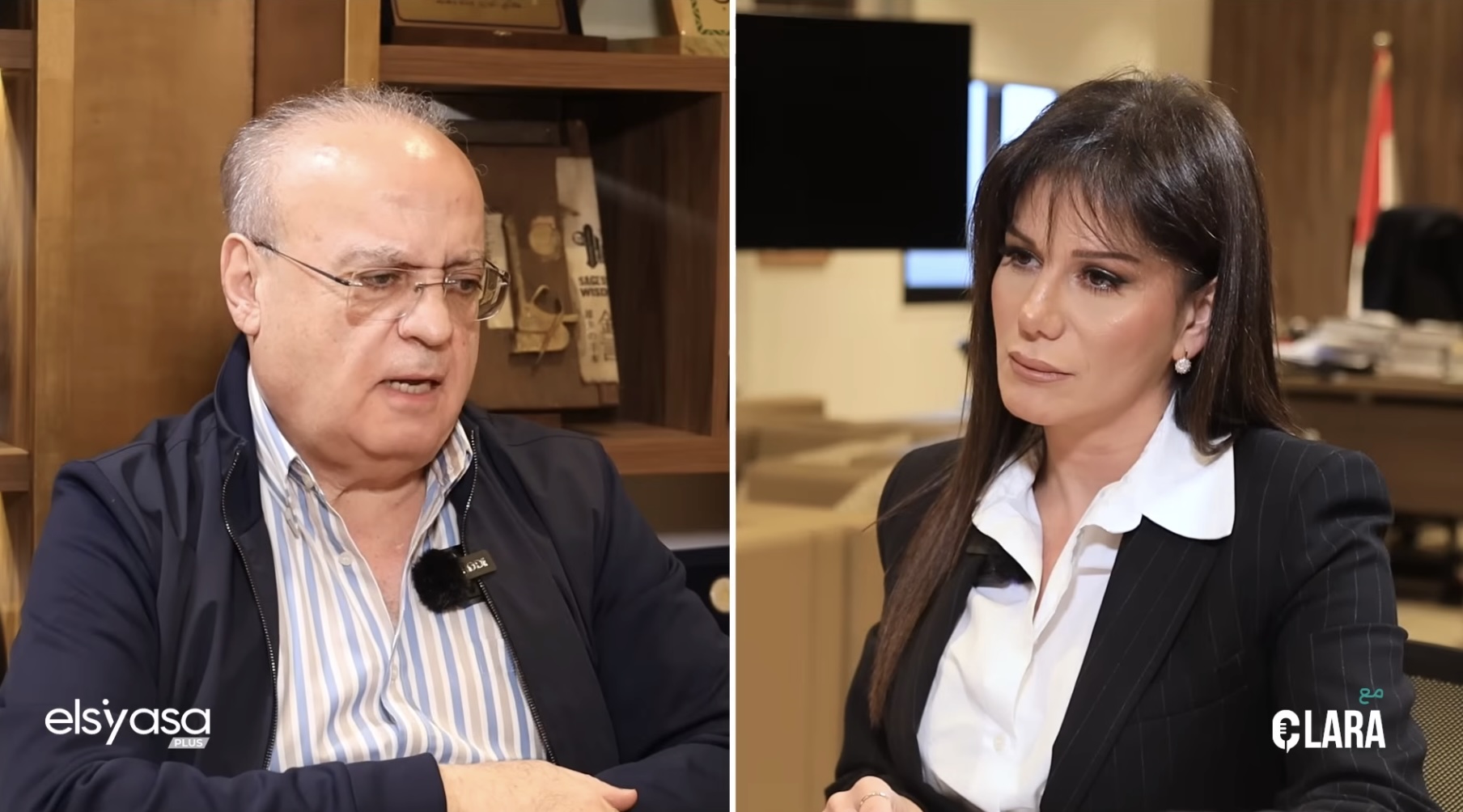
Wahhab argued that the region is heading toward a broad “partition earthquake,” considering that the American decision is moving toward a war on Iran—not necessarily to overthrow the regime, but to change Iran’s approach toward a more pragmatic model and greater inward focus. He warned that the fall of Iran, if it were to happen, would plunge the region into chaos extending to the Gulf, Turkey, and the Arab East.
On the Lebanese front, Wahhab said that President Joseph Aoun is a president for all Lebanese and cannot enter into confrontation with a large segment of the domestic arena. He indicated that the goal of the current phase is to neutralize Lebanon from any potential regional confrontation. In a position that drew wide attention, Wahhab said he senses that Hezbollah has taken a decision not to be part of a war on Iran, stressing that there is no fear of intervention and no “support war” for Iran. He added that this trajectory can be built upon to spare Lebanon from war, in the context of ongoing dialogue between the state and the party, alongside communication with the Americans.
Wahhab also addressed the issue of restricting weapons, considering that Washington is racing against time to move to the second phase of the process and conclude it quickly. He linked the Lebanese scene to regional tracks, particularly Saudi Arabia and Syria, as well as to the Abraham Accords and normalization file, concluding with an assessment that the Joseph Aoun era could be one of agreement or peace with Israel. He justified this by saying that the Palestinians, in his description, are negotiating alone for their own interests, and that tying Lebanon to the conflict is no longer acceptable to many.
In the context of developments in Syria, Wahhab paused at what is happening in Sweida and southern Syria, speaking of “something big” that could occur at all levels. He reaffirmed his commitment to supporting the Druze, while declaring a firm position: “I am with the presidency of the republic and the army, whether right or wrong,” considering them, in his words, among the constants of Lebanon’s unity.